NHS Online Consultation Delays in 2026: Why Responses Are Slower & What You Can Do
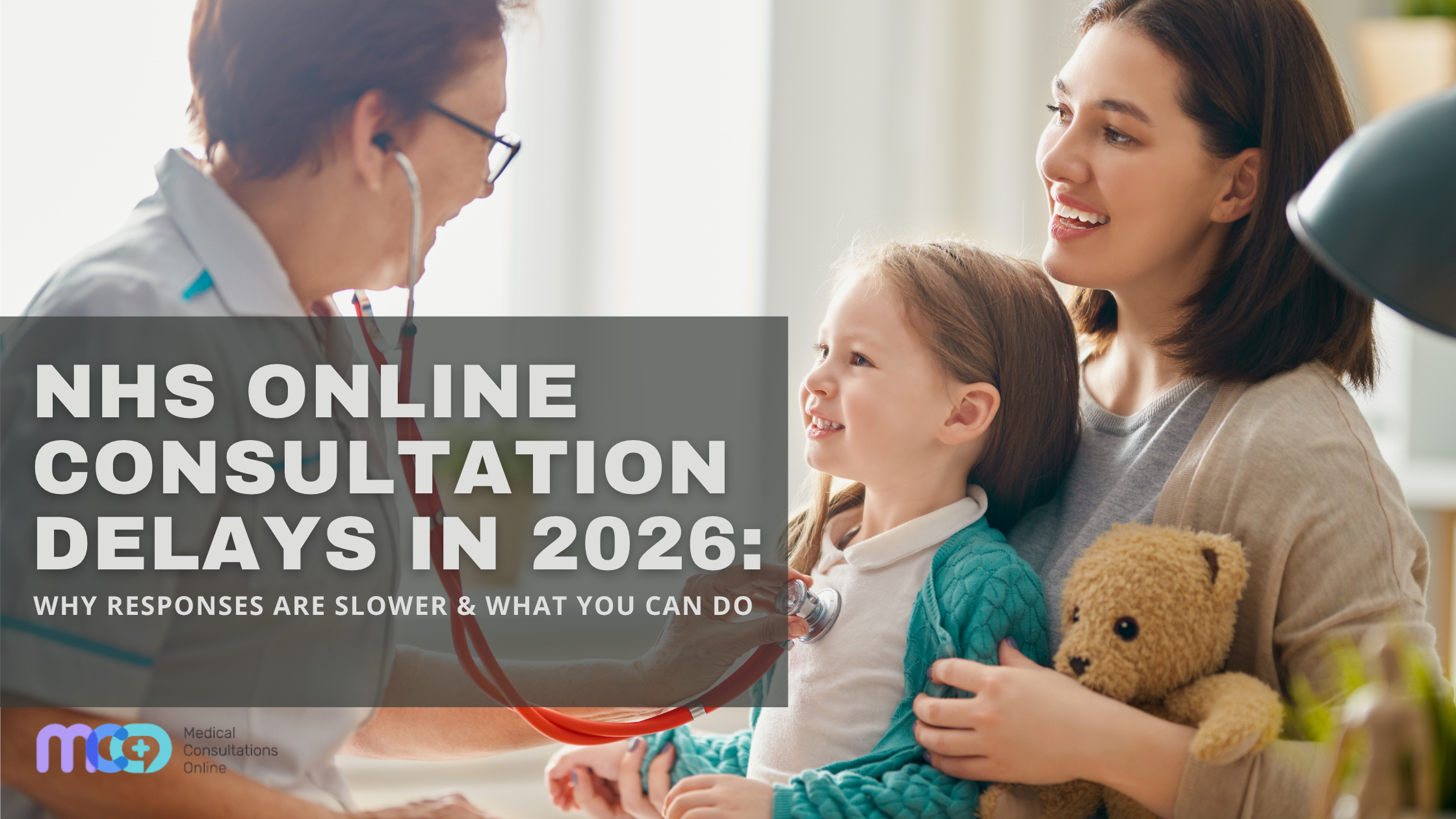
Hello there! You submitted your symptoms. You filled out the GP form carefully. You clicked “submit”… and now you’re waiting. No response yet. No clear timeline. And your symptoms are still there. If this feels familiar, you’re not alone.
In 2026, more patients across the UK are experiencing delays in NHS online consultations, especially for conditions that feel urgent but may not be prioritised immediately. And while the system is designed to help, the waiting can often leave you feeling:
Unsure, concerned and wondering what to do next. Let’s break this down simply and honestly.
- Why NHS Online Consultation Delays Are Increasing
- How Long Does It Take to Get a GP Response?
- What Patients Experience During the Wait
- When Waiting Is Okay And When It’s Not
- What to Do If You Haven’t Received a Response
- How Patients Are Getting Faster Help in 2026
- NHS vs Online Consultation: Understanding the Difference
- When to Seek Urgent Help
- Key Takeaway
- If You’re Still Waiting and Unsure
Why NHS Online Consultation Delays Are Increasing

Over the past few years, GP practices have shifted towards digital-first systems.
This includes:
- online consultation forms
- digital triage systems
- prioritisation based on urgency
While this helps manage large volumes of patients, it also means:
- not every request is reviewed instantly
- responses depend on clinical prioritisation
- non-urgent cases may take longer
In simple terms: The system is working but demand is higher than ever.
How Long Does It Take to Get a GP Response?
There’s no single answer, but based on current patterns:
- Same-day response → possible, but limited
- 24–48 hours → common
- 48–72 hours or more → in some cases
This depends on:
- your symptoms
- your GP practice capacity
- how your case is prioritised
What Patients Experience During the Wait

This is the part no one really talks about. While waiting, most patients:
- keep checking their phone or email
- re-read their symptoms
- search online for answers
- start to worry if things are getting worse
The challenge isn’t just the delay. It’s the lack of clarity during that delay.
When Waiting Is Okay And When It’s Not
It may be okay to wait if:
- your symptoms are mild
- you are feeling stable
- there is no worsening discomfort
You should not wait if:
- symptoms are getting worse
- you feel increasing pain or discomfort
- breathing becomes difficult
- fever persists
These situations may need quicker medical attention.
What to Do If You Haven’t Received a Response
If you’re still waiting, here’s a simple approach:
1. Give it a reasonable window:
Allow 24–48 hours for a response
2. Reassess your symptoms
Ask yourself:
- Am I improving?
- Am I getting worse?
- Do I feel unsure about what’s happening?
3. Consider faster access to medical advice
If you’re not improving or feel uncertain, waiting longer may not help. This is where many patients are now choosing a different route.
How Patients Are Getting Faster Help in 2026
Across the UK, there’s a clear shift in behaviour. Patients are moving towards: Same-Day Online GP Consultations. Not because they want to replace NHS care but because they need timely clarity.
What a Same-Day Online Consultation Offers
- quick access to a clinician
- structured assessment of your symptoms
- clear guidance on next steps
- prescription if clinically appropriate
Most importantly: You don’t have to wait without answers.
NHS vs Online Consultation: Understanding the Difference
| NHS Online Consultation | Same-Day Online GP |
| Structured triage system | Direct clinician access |
| response time varies | same-day response |
| callback dependent | immediate clarity |
| prioritised by urgency | predictable access |
Both systems have their place. But when time and clarity matter, patients are increasingly choosing faster access.
When to Seek Urgent Help
If you experience:
- difficulty breathing
- chest pain
- severe symptoms
Call NHS 111 or 999 immediately
Key Takeaway
NHS online consultations are designed to help but in 2026, delays are becoming more common. And when you’re unwell, waiting without clarity can feel overwhelming. The important thing is: You don’t have to stay stuck in that waiting phase.
If You’re Still Waiting and Unsure
If your symptoms:
- haven’t improved
- are causing concern
- or simply need clarity
Get a same-day online consultation with a UK-registered clinician
Speak to a clinician today and understand your next steps. Looking for your condition below and book same online consultations.
FAQs

Why is my NHS GP not responding?
GP practices prioritise cases based on urgency, which can lead to delays for non-urgent conditions. Get same day clinician assistance online. Check your condition here.
How long does an NHS online consultation take?
Responses can range from the same day to 48–72 hours depending on demand and priority. Chat with an Expert
What should I do if my GP hasn’t replied?
If symptoms persist or worsen, consider seeking medical advice through faster alternatives. Book same day consultation here.
Can I get same-day medical advice in the UK?
Yes, online consultations can provide same-day access to a clinician. Click Here
Is it safe to use online Clinician consultations?
Yes, when provided by UK-registered clinicians following medical guidelines. Know More
This article provides clear and practical guidance on understanding NHS online consultation delays in the UK and what you can do if you’re left waiting without clarity. It reflects the real experience many patients face today — where uncertainty during delays can feel just as difficult as the symptoms themselves. The content highlights why timely medical advice matters, how modern online consultation services offer faster and more reliable access to clinicians, and what steps you can take to make informed decisions about your health. The suggested illustrations (response timelines, decision pathways, and consultation journey visuals) enhance understanding by showing how patients can move from waiting to receiving the right care efficiently.
Latest articles
- NHS Online Consultation Delays in 2026: Why Responses Are Slower & What You Can Do
- Same-Day GP Access in London: What Options Do You Actually Have in 2026?
- Chest Infection Recovery Timeline in 2026: What’s Changed & What to Expect Day-by-Day (UK Guide)
- Can You Get Antibiotics for a UTI Without Seeing a GP?
- How Long Does a UTI Last Without Antibiotics? (UK Medical Guide 2026)
Copyright Medical Consultations Online | Created by Rak Design
Tell us what’s going on and we’ll guide you calmly, step by step.
⚠️ If you have severe chest pain, sudden breathlessness, fainting, or symptoms of a stroke,
please call 999 immediately.
We won’t use your number for marketing. Read our Privacy Policy here.